A new direction in STEAM education: kids learn more through play than from textbooks
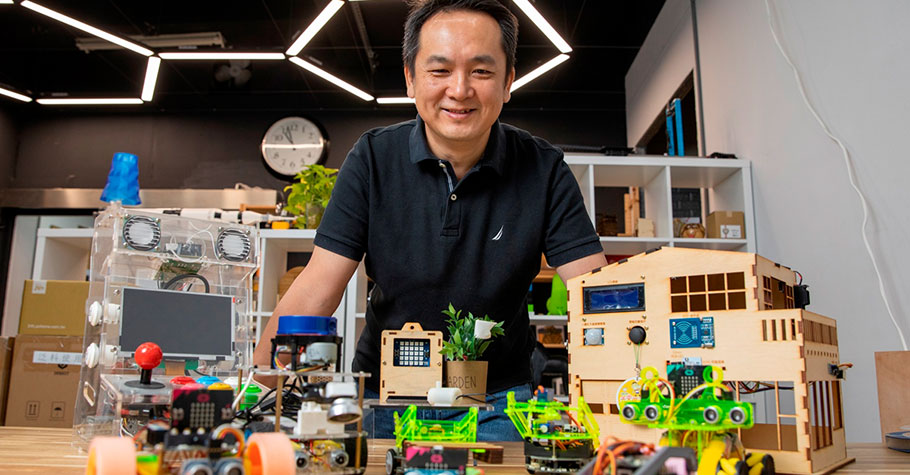
MoonCar, a Famicom-style arcade game machine, a temperature and humidity sensing automatic watering device, Q-Legged Beast, and a fortune-telling machine. It may be hard to believe, but these novel, fun products, full of lights and sound and with different smart-technology functions, were all assembled by children using the micro:bit module kits released by CIRCUS Pi, which combine programming and hardware assembly concepts.

From STEM to STEAM: building logical thinking across disciplines is a growing trend
After the 108 Curriculum Guidelines officially took effect, Taiwan’s classrooms felt a considerable impact. Beyond teaching traditional knowledge, schools now also need to build children’s core competencies to help them adapt to future challenges. The newly added “programming” component of the technology learning area is especially unfamiliar and worrying to many parents: “Coding? How could a child possibly do something so technical?” and “What are AI, big data, and the cloud, anyway? How will my child understand these future trends?”
In fact, teaching children to write code, or “Kids Coding,” is not a new concept. After the U.S. government announced in 2011 that it would promote STEM courses combining science, technology, engineering, and mathematics in primary and secondary schools, STEM education became a trend and an education policy that countries around the world compete to advance.
As the age of AI and smart technology arrives, future industries urgently need innovative talent with a foundation in science. Knowledge from a single subject can no longer keep pace with industry development. Integrating knowledge across disciplines is necessary to develop children’s problem-solving and innovation abilities. Besides science and engineering, the humanities and arts (Arts) are also an important part, so educators proposed adding this concept to the original STEM education. While focusing on technology skills, children can also bring in the design, creativity, communication, and aesthetic ways of thinking of the humanities and arts, which makes for a more well-rounded, integrated STEAM education.
Building coding and logical thinking skills with STEAM teaching kits
Whether it is STEAM education or the information technology skills emphasized in the 108 Curriculum Guidelines, the goal is to give children basic programming knowledge and the ability to analyze and solve problems. School courses in computing and living technology existed before, but the dazzling variety of commands and English terms in programming took away children’s enjoyment of learning. The new generation of Kids Coding brings programming concepts into games and fun themes and uses visual, drag-and-drop block thinking, so that by moving the mouse and applying logical thinking, children can learn programming in a more intuitive way.
In the STEAM approach, it is essential for children to work with their hands and enjoy the results. Programming courses in the past stopped at theory practice on a computer with no physical product, which inevitably weakened learning outcomes. To promote STEAM education, other countries have released many STEAM teaching kits and toys that combine science experiments, fun, and teaching, so that children learn programming and logical reasoning while playing and building.
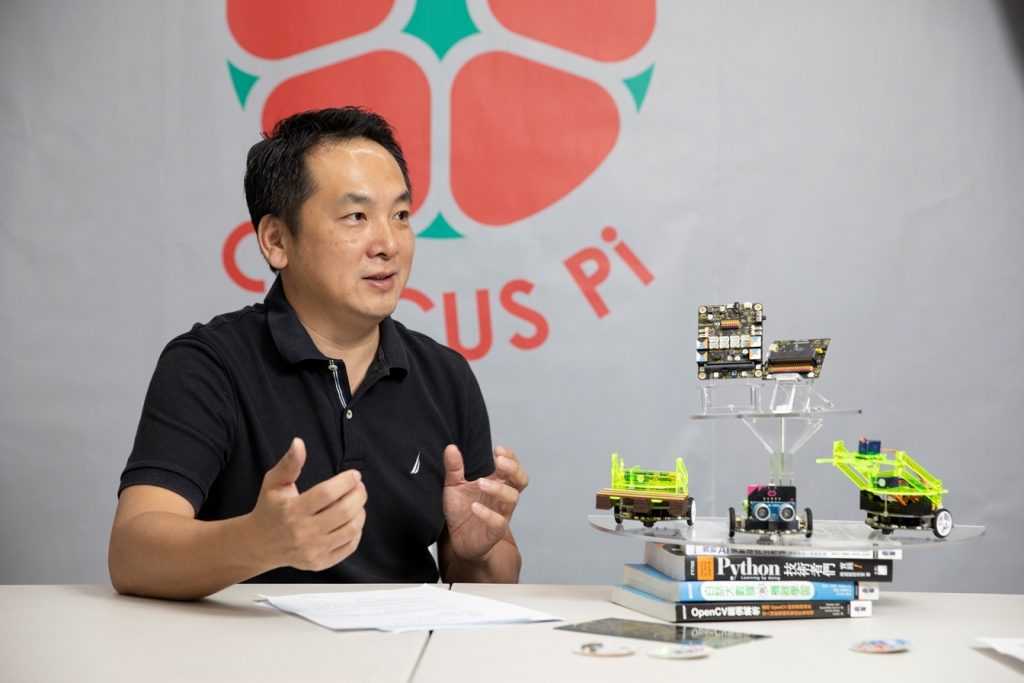
Huang Wenci, CEO of CIRCUS Pi and a well-known Taiwanese Maker himself, operates iC Shopping, an electronic components sales platform, and is also actively involved in promoting maker activities. His experience setting up a DIY zone at a Maker Faire planted the seed for creating CIRCUS Pi and developing STEAM teaching kits later on.
He designed a simple circuit on custom LED badges. Visitors could light up the LED by soldering the circuit and experience the principles of circuits firsthand. “After we ran several DIY events, we found that many children and parents were very focused and happy while soldering circuits, and the results were very good.”
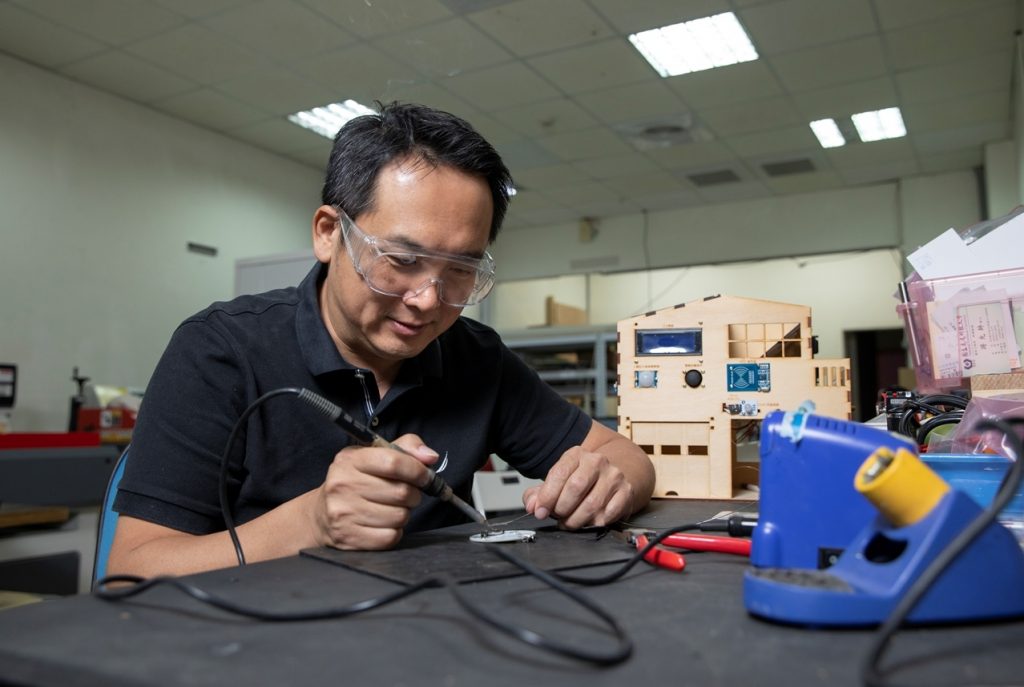
Huang Wenci found that children have a strong desire to learn by doing for themselves, and that hands-on experience helps their learning more. An active promoter of maker culture and maker education, he wanted children to have room to be creative and make things from an early age, so he founded CIRCUS Pi at the end of 2018. Inspired by the fantastical, wondrous elements of a circus and combining the STEAM concept, it creates a range of fun STEAM teaching kit modules that lead children to explore the joy of developing things and solving problems.
Creating STEAM teaching kits for Taiwanese children
Compared with the wide variety of STEAM education products abroad, Taiwan had no home-grown STEAM teaching kits before CIRCUS Pi. “Most STEAM teaching kits used in Taiwan today are manufactured in mainland China and imported,” Huang explained. Because the teaching kit market is small, almost no Taiwanese companies invest in developing their own, and ordinary electronics manufacturers rarely get involved. He therefore hoped to use the team strength built up through iC Shopping and Maker Lab, along with Taiwan’s R&D capability, to develop STEAM teaching kits suited to Taiwanese children.
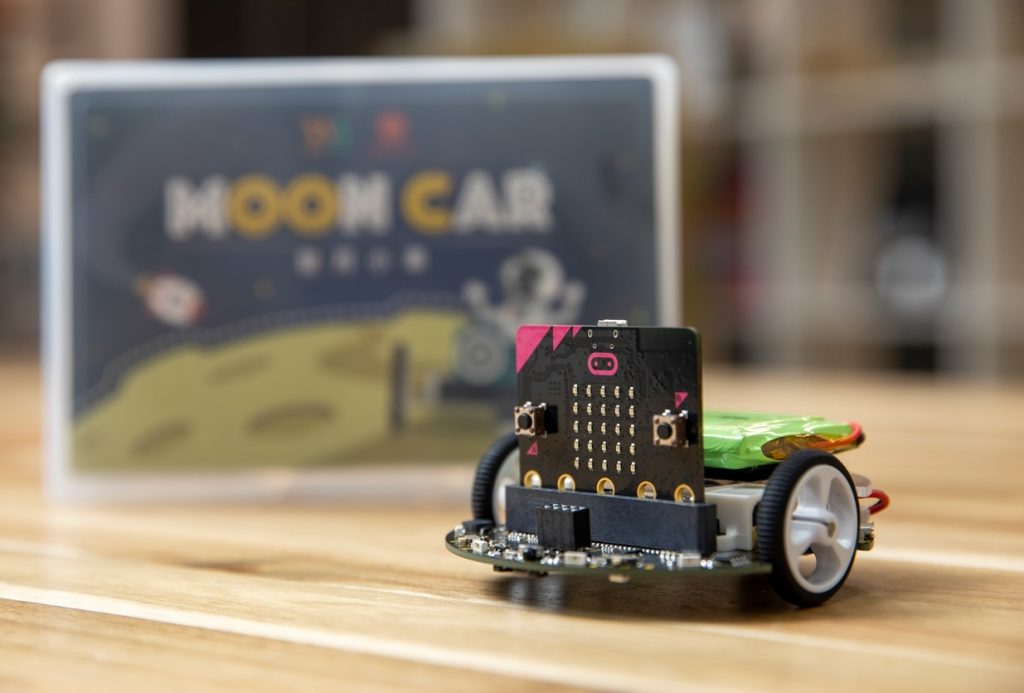
“CIRCUS Pi’s front line is actually very long. Our audience runs from elementary school students to college students, and even retired members of society. We hope to use the strength of the MIT (Made in Taiwan) brand to create STEAM teaching kits that Taiwan designs, develops, and produces itself,” Huang said with a smile. Although the kits focus on school settings, he believes curiosity about knowledge should not be divided by age, so he does not limit CIRCUS Pi to students. Anyone interested in maker culture and doing things by hand can find a suitable module on CIRCUS Pi, or go on to iC Shopping to buy expansion parts, giving STEAM education more diverse development.
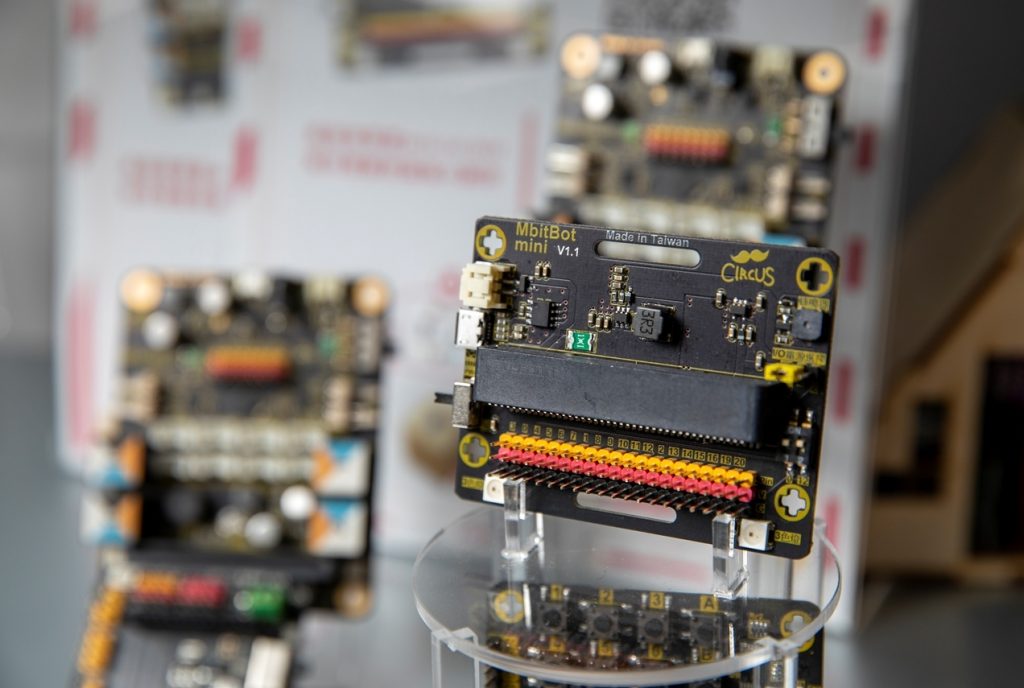
CIRCUS Pi uses the micro:bit, a microprocessor developed by the British BBC for children, as its base template and has gone on to develop a range of expansion boards, modules, and module kits. The expansion boards include MbitBot, MbitBot mini, and the car series. The modules include infrared receivers, temperature and humidity sensors, relays, and many other products. The module kits use different themes as their product design concept, with complete assembly plans and material packs, so children can assemble them on their own by following the instructions and teaching videos.
As an example, Huang cited Taiwan’s worsening air pollution problem. CIRCUS Pi linked sensor, big data, and cloud concepts to develop the “Air House” teaching kit, which can simply detect the PM2.5 level inside a home. It is both fun and tied to current issues.
Instead of technical jargon and command explanations, CIRCUS Pi builds STEAM teaching kits around themed series. Science is then no longer an honor reserved for academic halls but everyday knowledge that anyone can make by hand with unlimited creativity, which brings STEAM education into daily life.
Original source:Future Parent-Child Learning Platform